Eventdesign

Why well-designed spaces say more than words

There are moments at events that never fail to fascinate me. When people enter a room, slow down for a moment, and look around. They haven’t had a conversation yet, haven’t heard a presentation - and yet something has already made an impression.

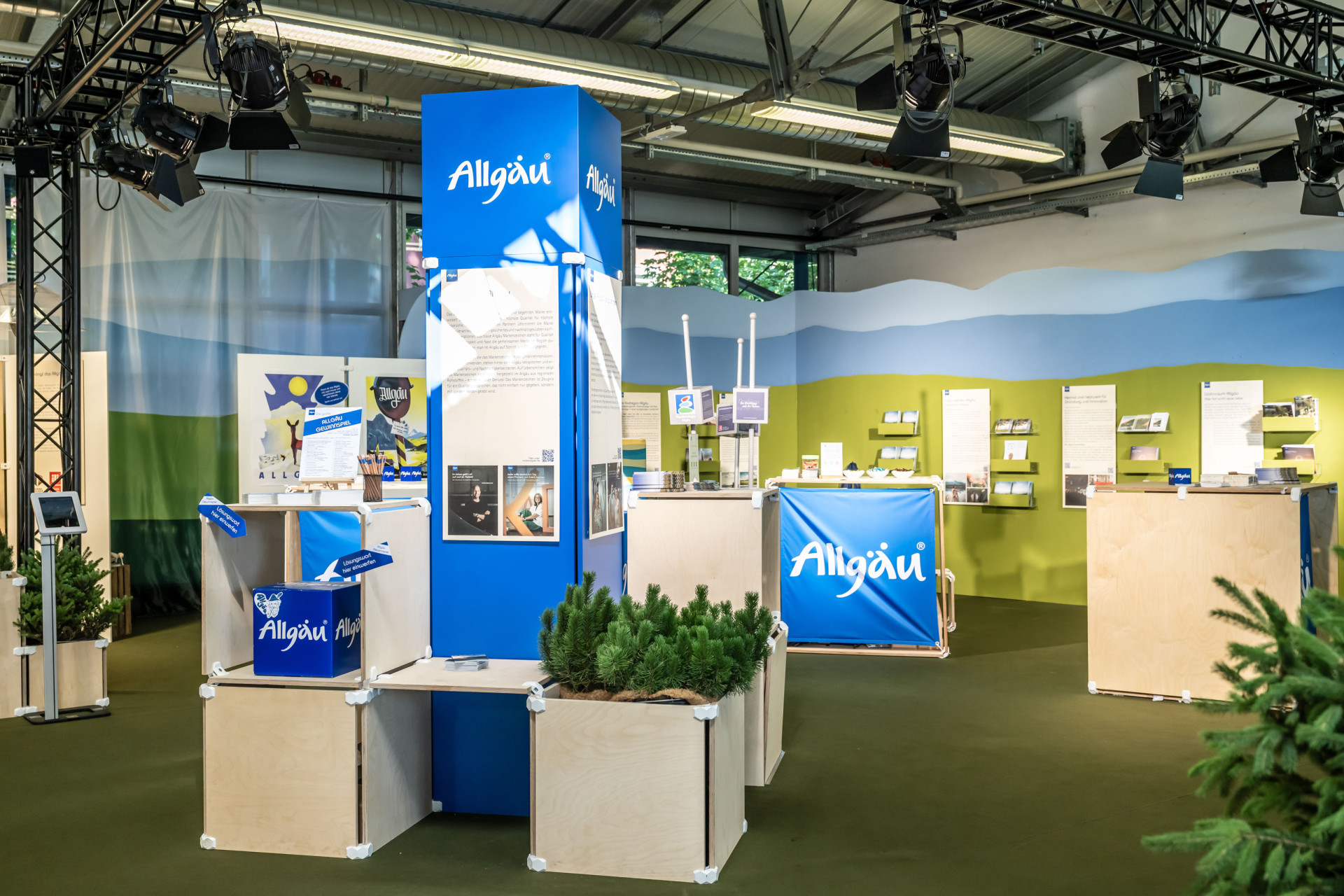
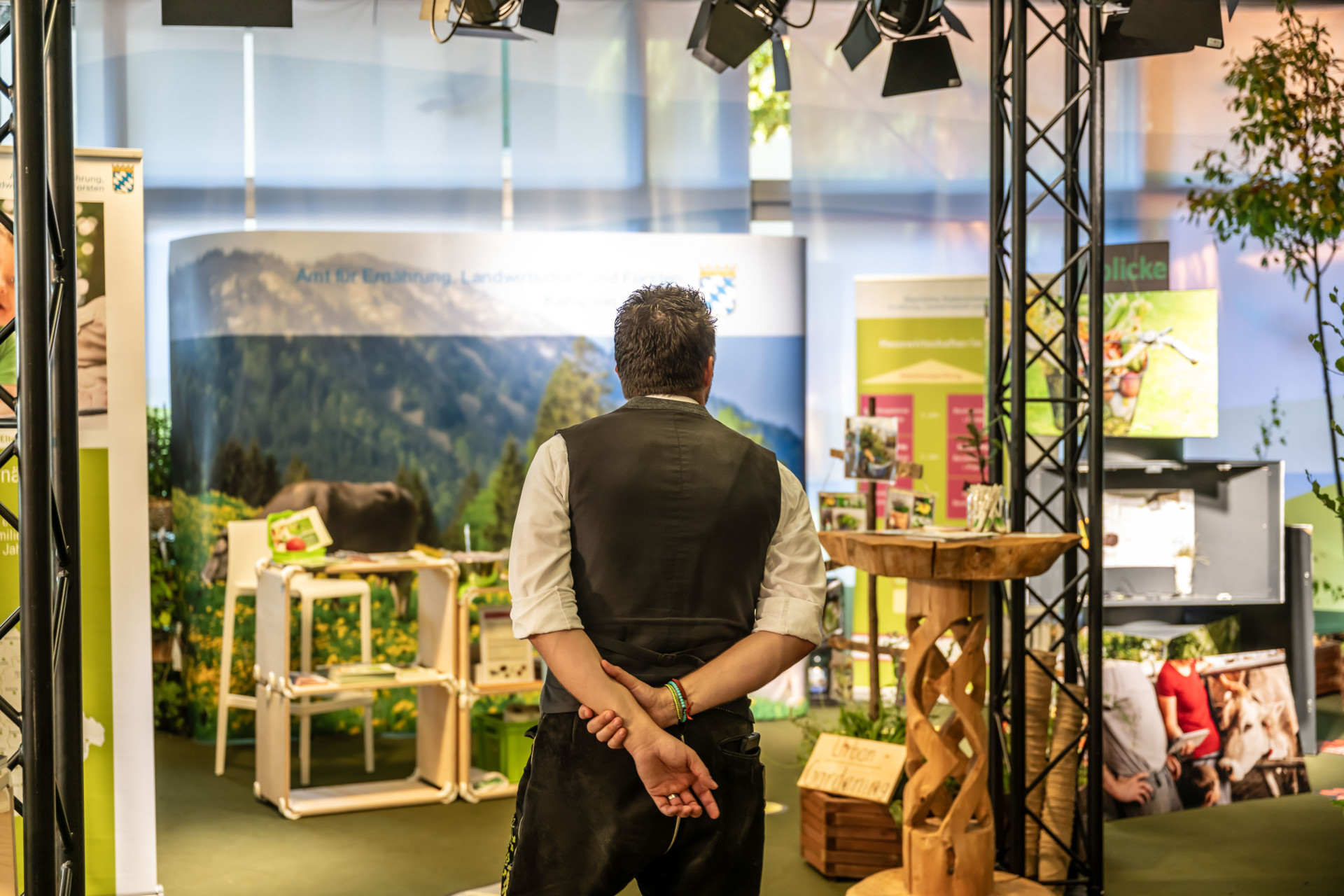
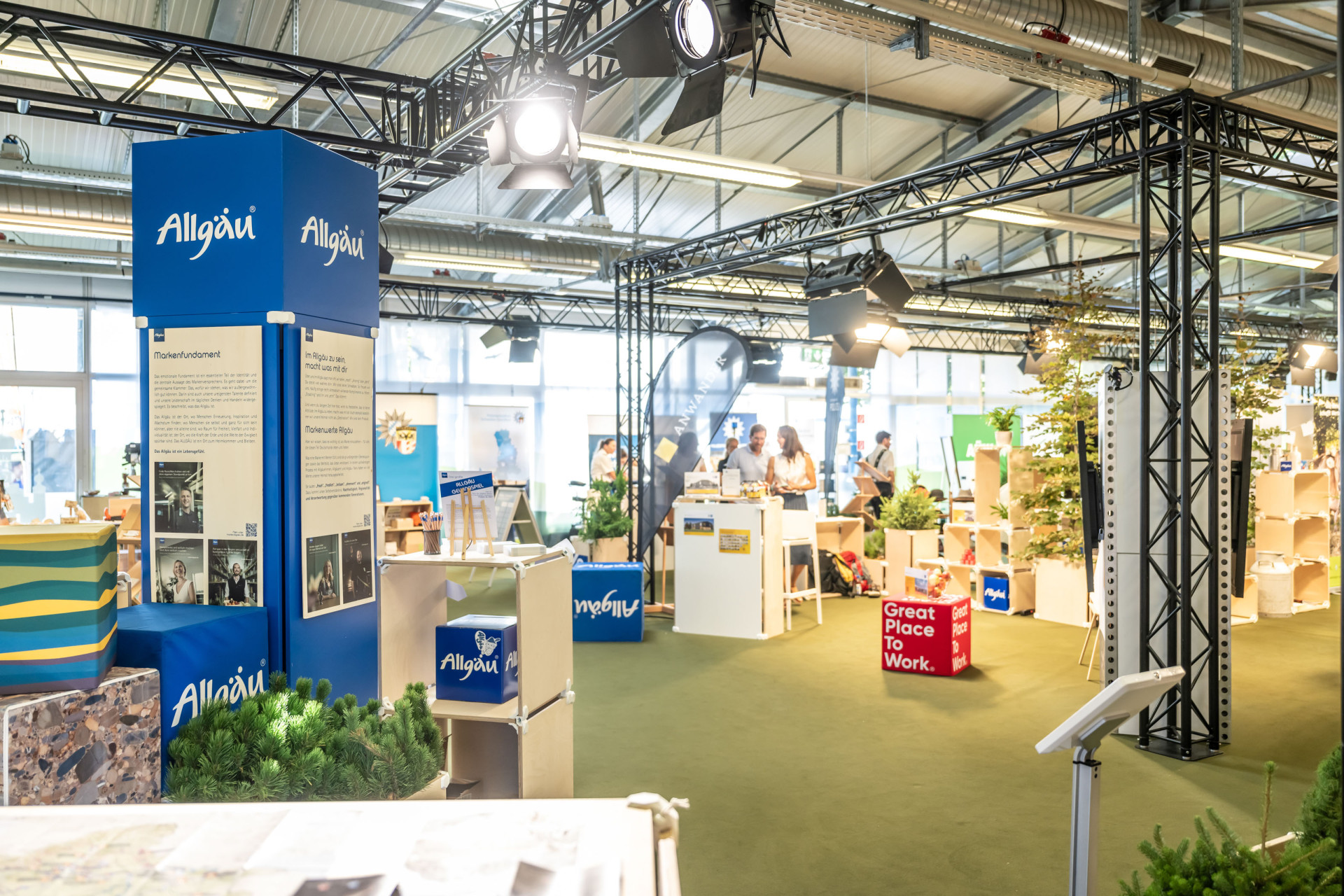
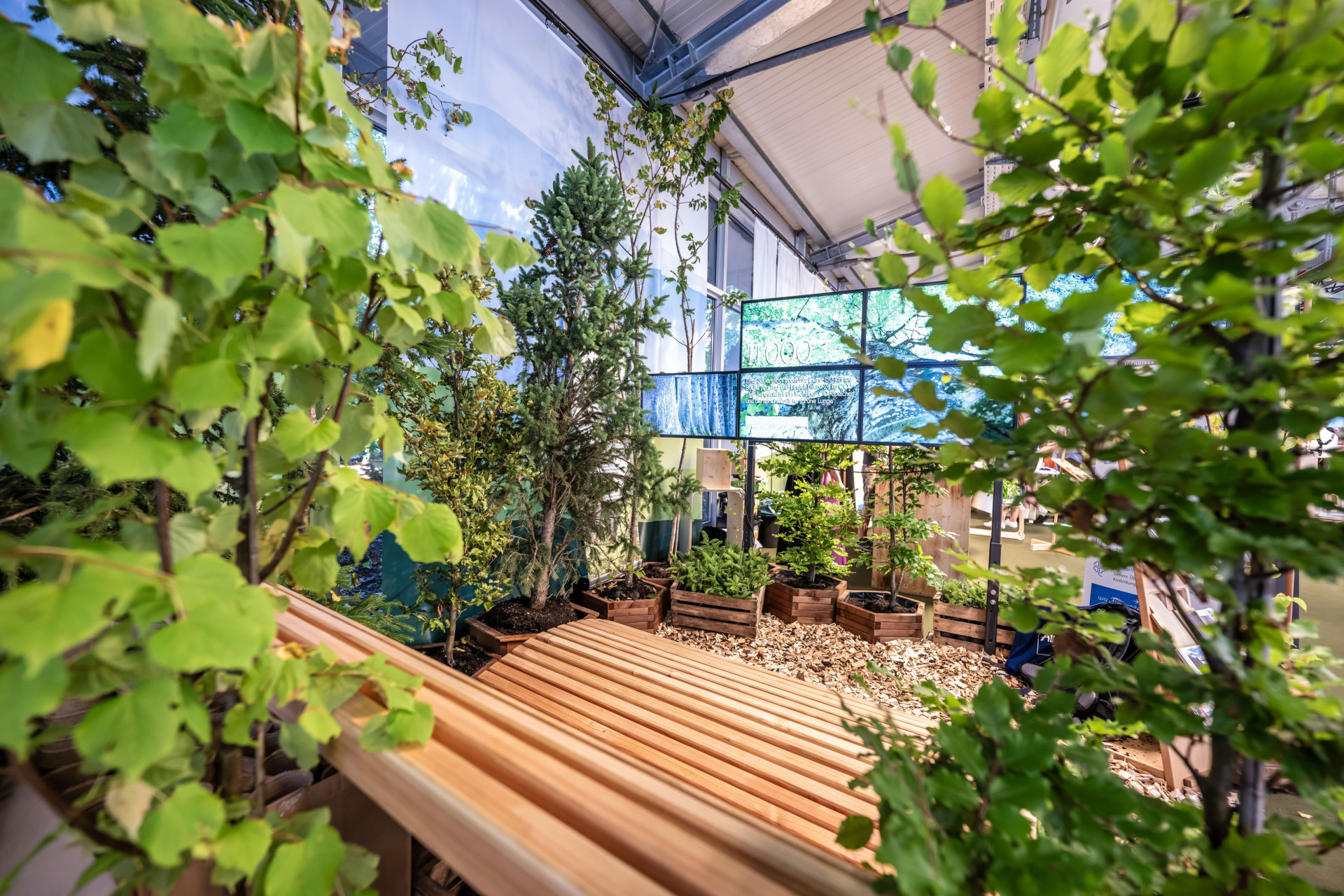
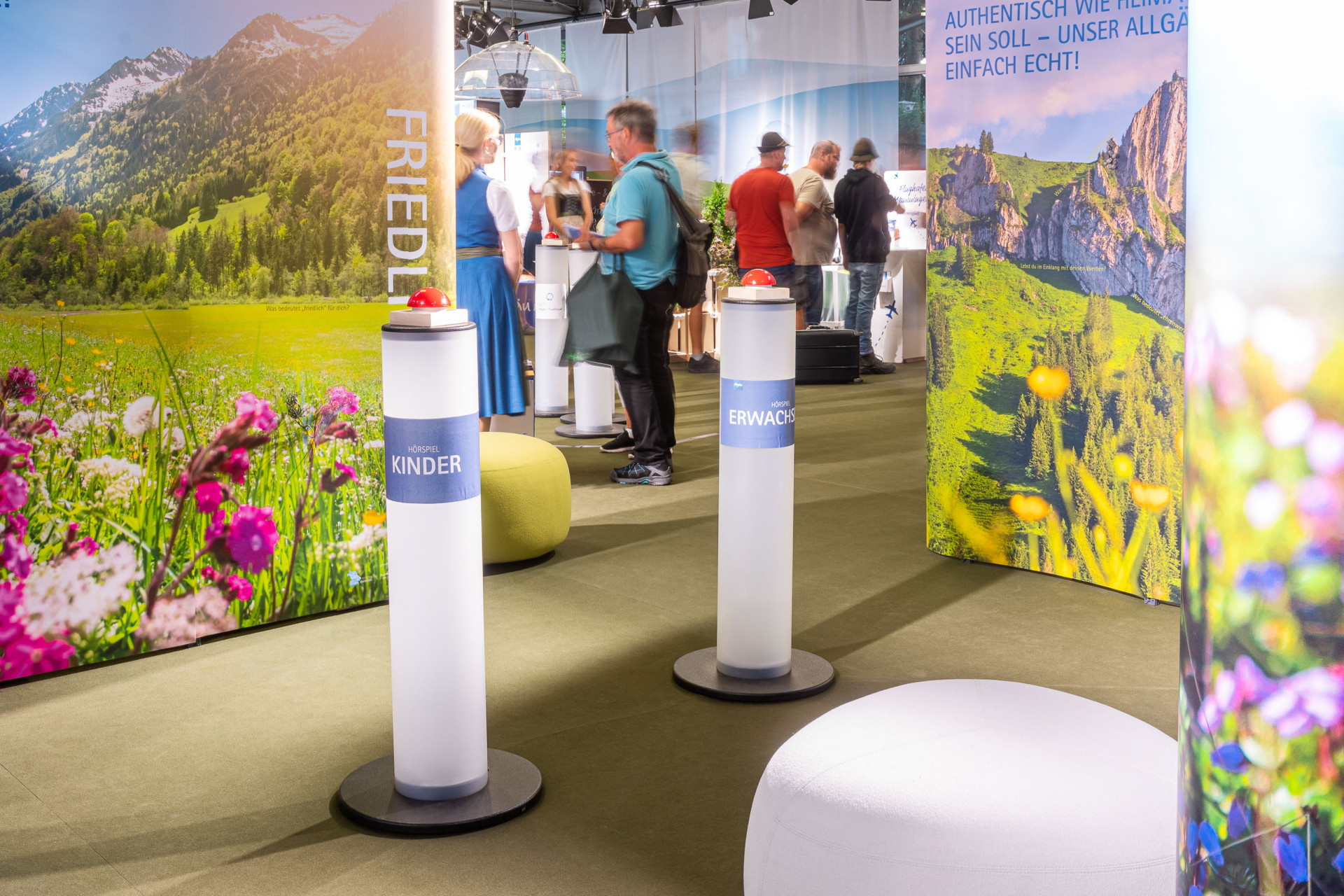
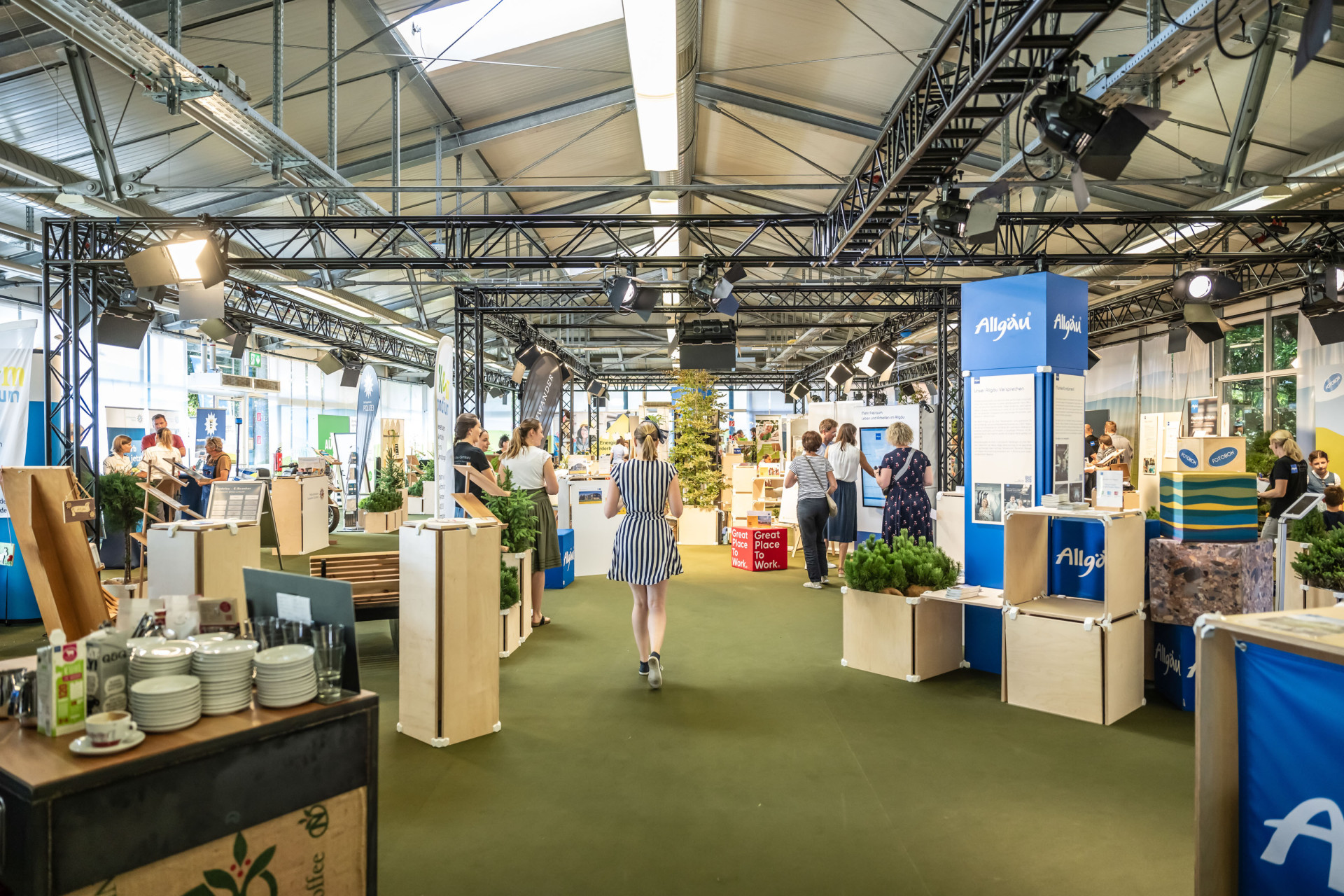
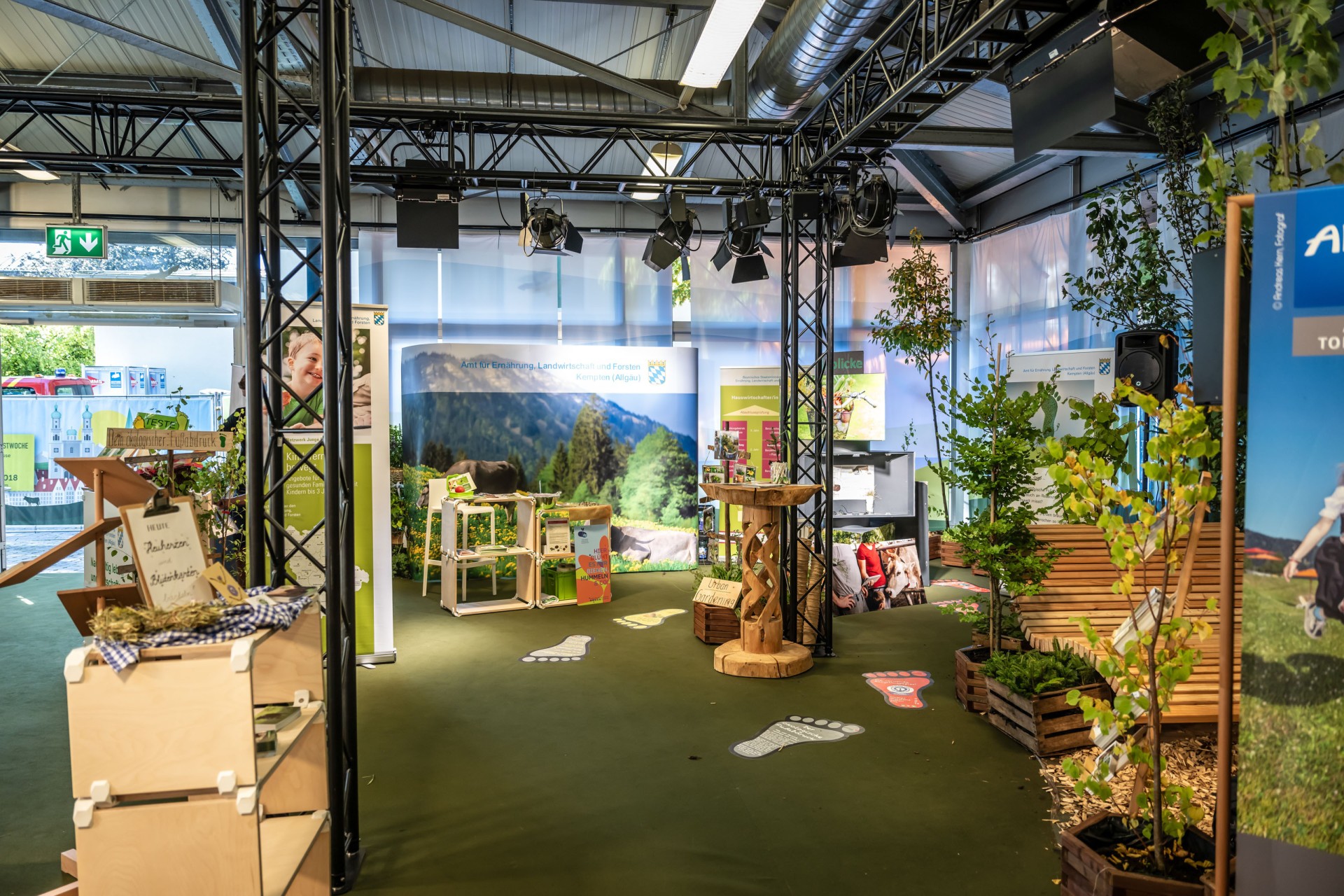
I got to experience exactly this moment for the first time in 2022 at the Haus der Allgäuer Werte. Visitors weren’t entering a traditional exhibition hall. Green flooring, wood, plants, open gathering areas, and a sense of the horizon defined the space. No one had to explain what the Allgäu stands for. The space told the story itself.

Photos: © by Dominik Berchthold & KAD

Author
Article type
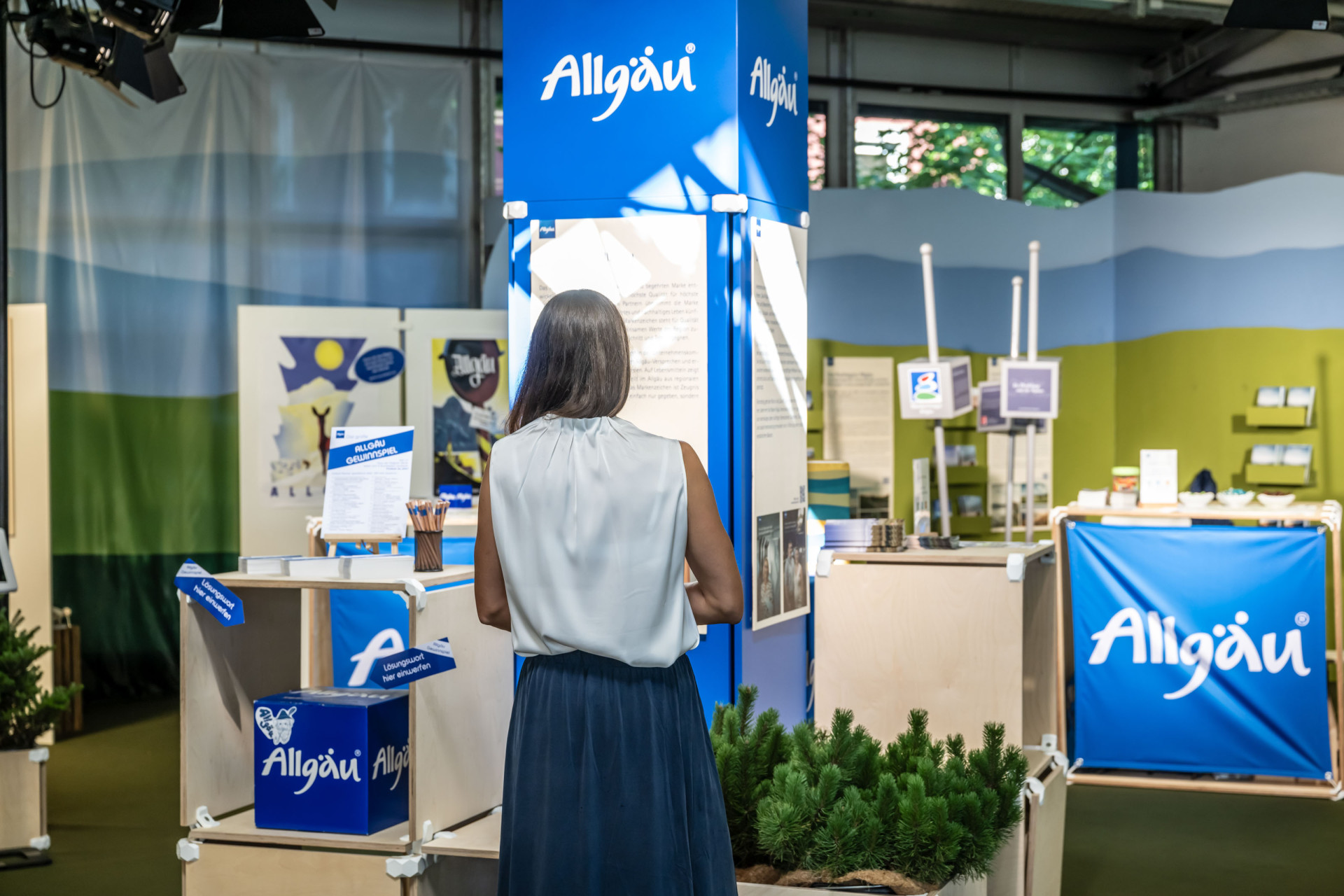
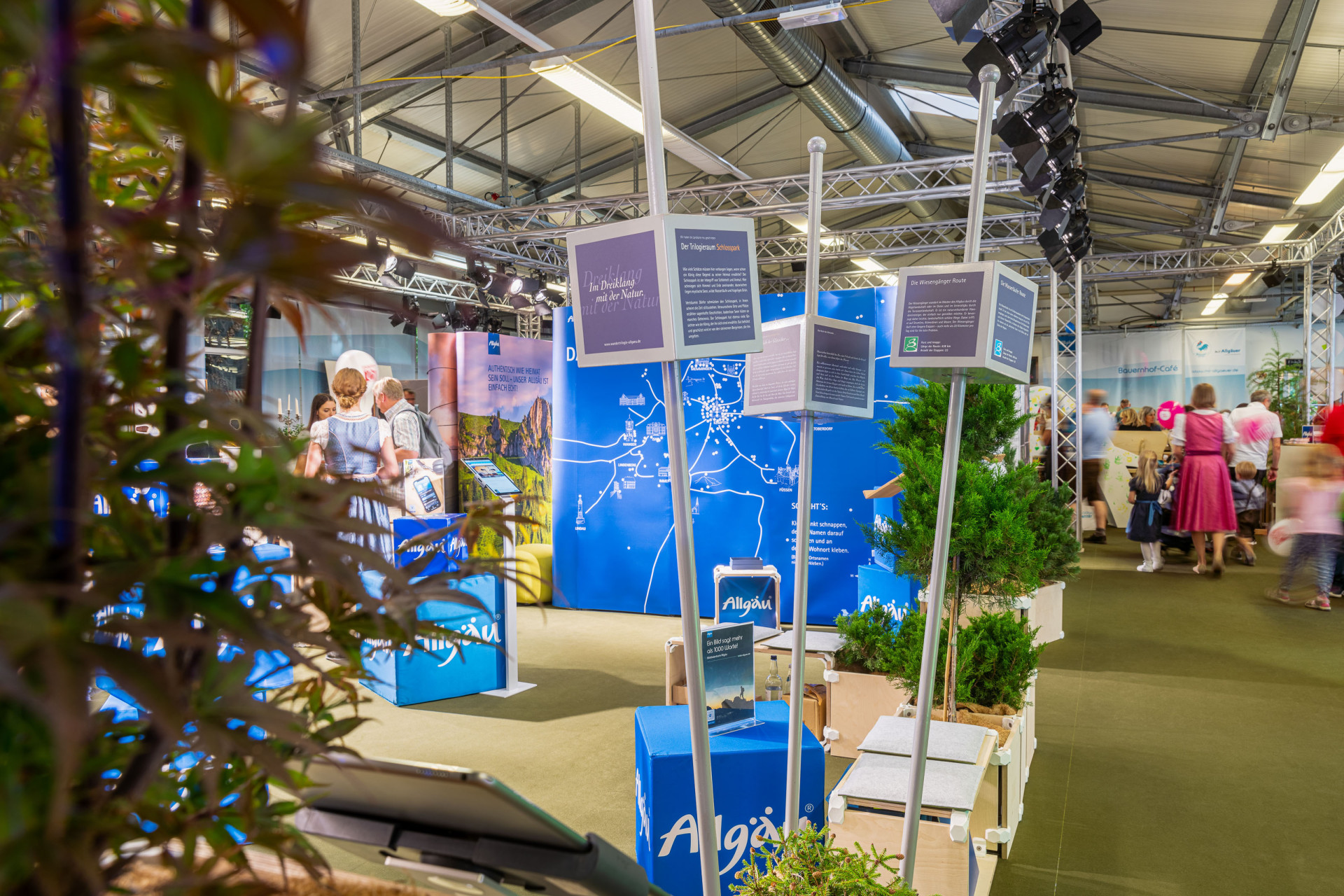
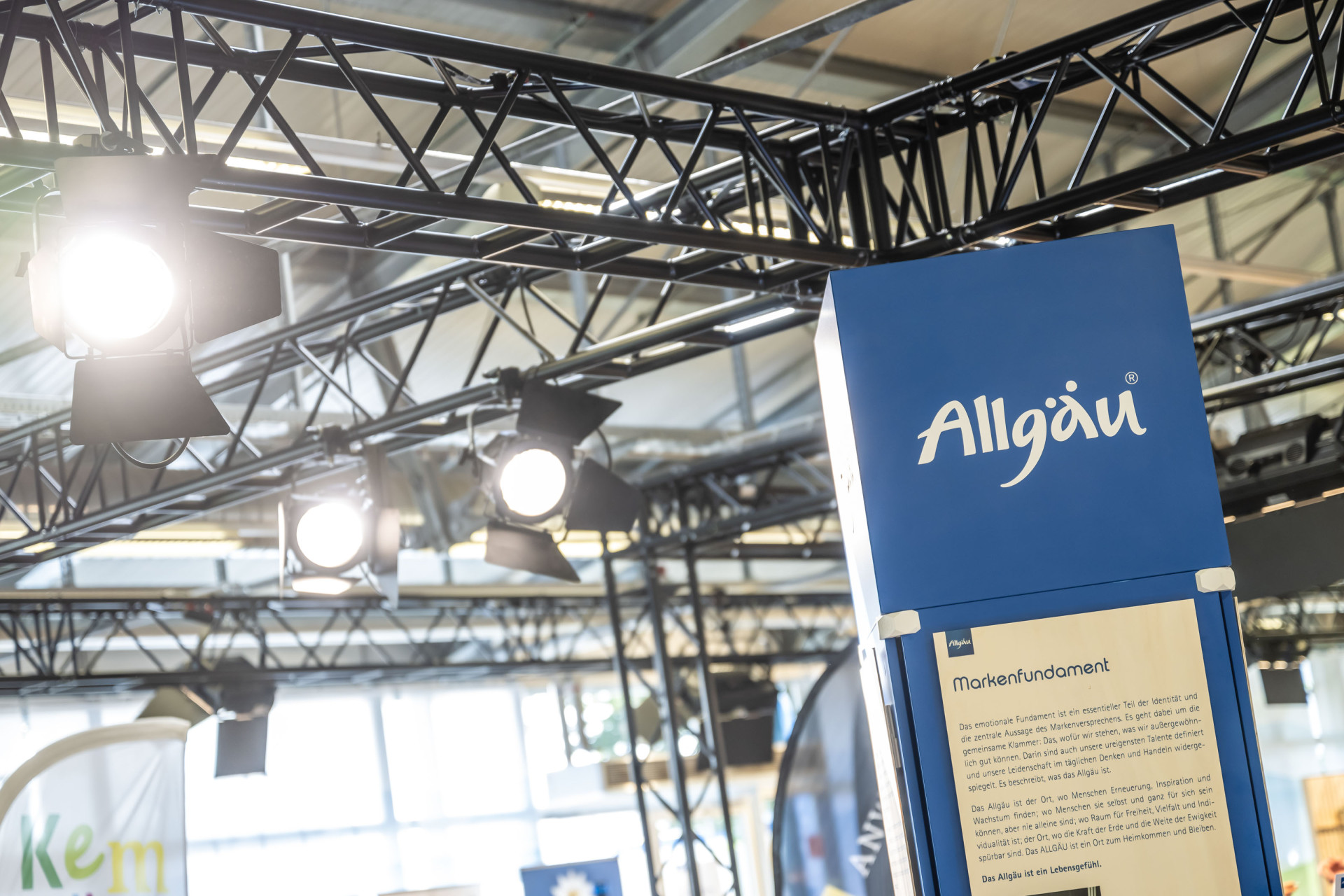
House of Allgäu Values at the Allgäu Festival Week featuring blue and white exhibition elements, plants, and a stylized Allgäu landscape as part of the event design.

Spaces speak before people do

When planning an event, people first think about the program, speakers, technology, logistics, or catering. All of these are important. But the first impression is formed even earlier. Even before anyone reads the content, they take in their surroundings: Is it bright or dark? Open or cramped? Noisy or quiet? Does a surface feel warm or cool? Do I intuitively know where to go?

I observe this time and again at events. Some people enter a room, stop, look around, and become curious. Others walk right through, even though exciting content is actually waiting for them there. The difference sometimes lies less in the program than in the space where it takes place.

“Spaces communicate before people speak to one another.”

The House of Allgäu Values: One Space Instead of Many Exhibition Booths

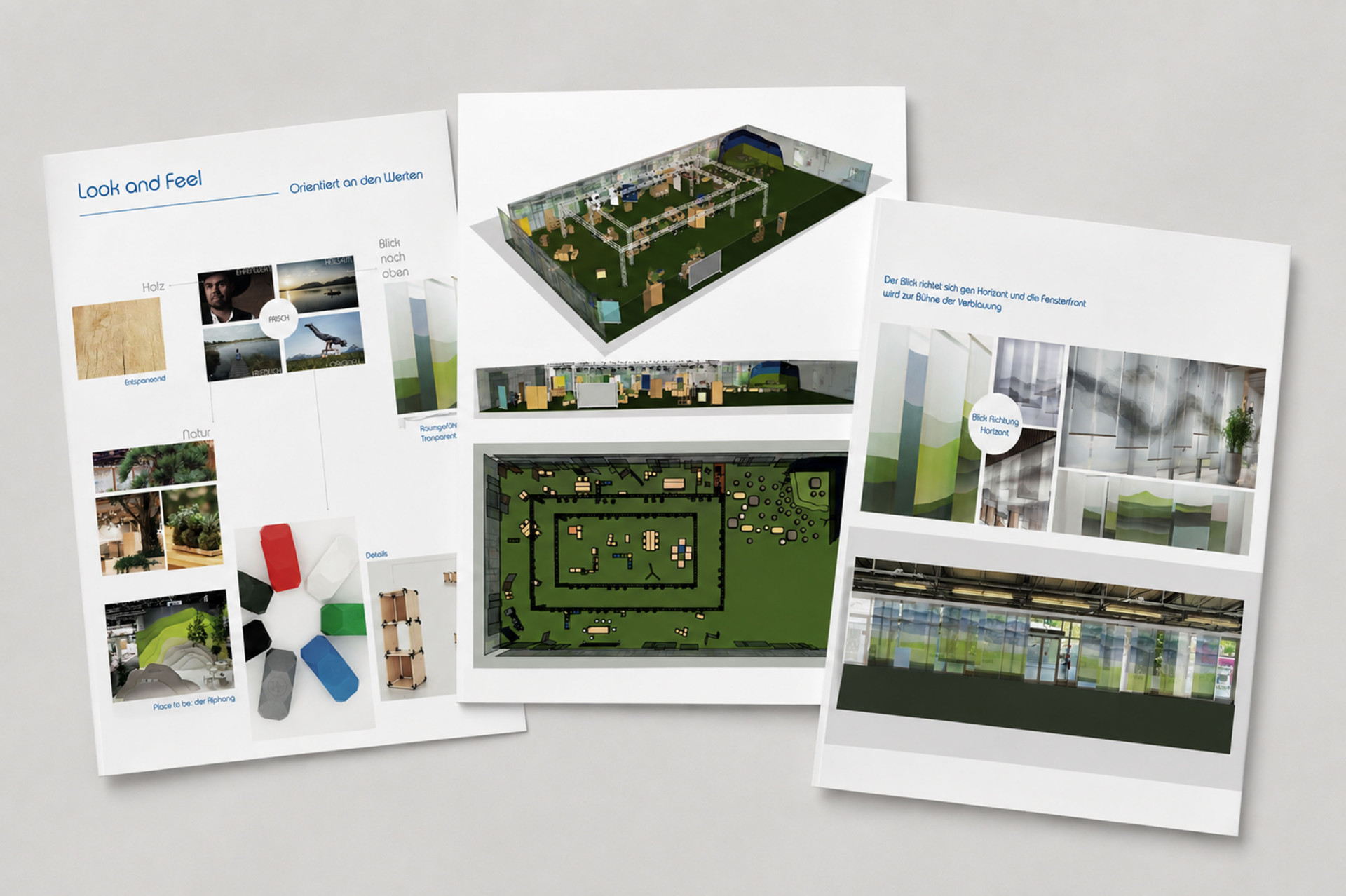
When we developed the basic concept for the House of Allgäu Values together with Allgäu GmbH, we deliberately chose not to create a traditional trade show setup. The idea was simple: not to showcase many individual brands -but to bring a shared identity to life. A green carpet stretched across the hall like a meadow. Wood and plants brought a natural feel to the market hall. Curtains opened up the view toward the horizon. The design was meant to feel “cozy—creative - fresh.” The brand partners remained visible but became part of a shared whole. Because instead of asking, “Who is bigger, louder, or more eye-catching?”, we asked ourselves:

Can values even be designed?

With the House of Allgäu Values, the crucial question is already embedded in the name: How do you design values?

The Allgäu’s brand identity is based on four values:
honorable, wholesome, peaceful, and original.

These concepts can be explained on a brand document. But in a physical space, it works differently. We can’t simply write “peaceful” on a wall and expect people to feel peace. And “wholesome” doesn’t become tangible just because it’s written on a sign. Abstract values must be translated into concrete experiences.

Honorable Mention: Design Can Be Honest

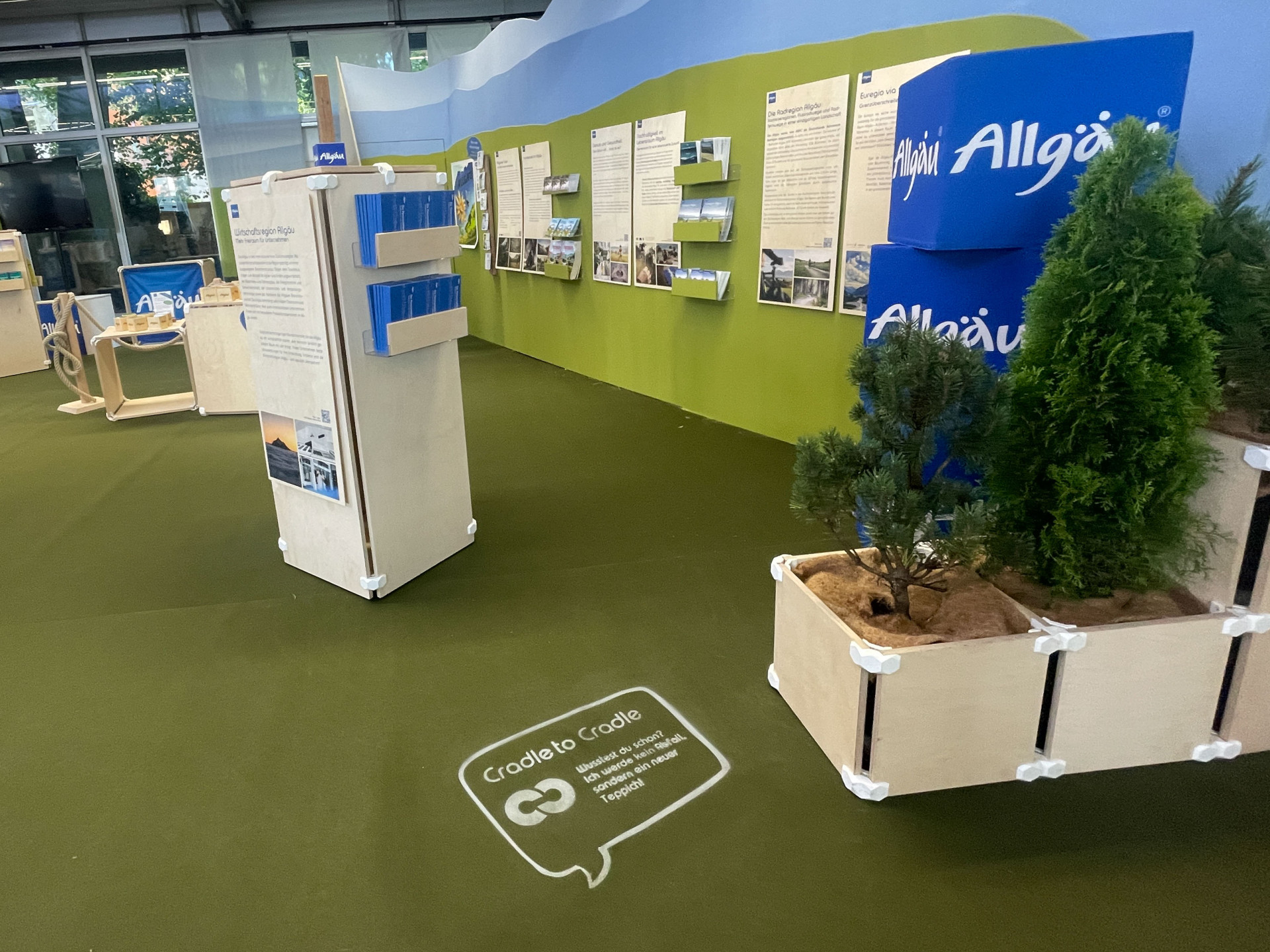
To me, “honorable” means, above all, authenticity and reliability. Design, too, can be honest. Wood should be allowed to look like wood. A structure doesn’t have to be hidden behind a high-gloss finish. That’s why natural materials, plants, and modular wooden furniture have defined the space from the very beginning. Many items are reused, adapted, and refined, rather than producing new sets every year.

A good example is the Cradle-to-Cradle carpet used in 2025 and 2026. After the event, it will be picked up and returned to the material cycle.

Healing: Spaces Can Be Good for You

Speaking of “soothing” - I love being here. A space can be calming or stressful. It can provide a sense of direction or feel overwhelming. At the House of Allgäu Values, greenery, plants, natural materials, and the sense of visual space help create a different atmosphere right in the midst of the hustle and bustle of the trade show. And we now know that this isn’t just our own impression. In 2025, our dual-track student Veronika Steinheber conducted a scientific study of the House as part of her project work. 366 people completed the survey in full. Nearly 90 percent agreed or strongly agreed that the colors, materials, and use of light were appealingly chosen. I found that particularly exciting: Suddenly, our gut feeling became a measurable visitor perception.

Peaceful: What happens if we do away with borders?

For me, “peaceful” is most evident in the way people share space with one another.
At the House of Allgäu Values, the partners don’t stand side by side like little fortresses. The areas flow into one another. Plants, seating, and open spaces structure the space without creating hard boundaries. And that makes a difference. Separation turns into neighborliness. Walkways become spaces for encounters. Individual exhibitors come together to form a shared space. Community is experienced spatially.

Original: A simple connection changes the system

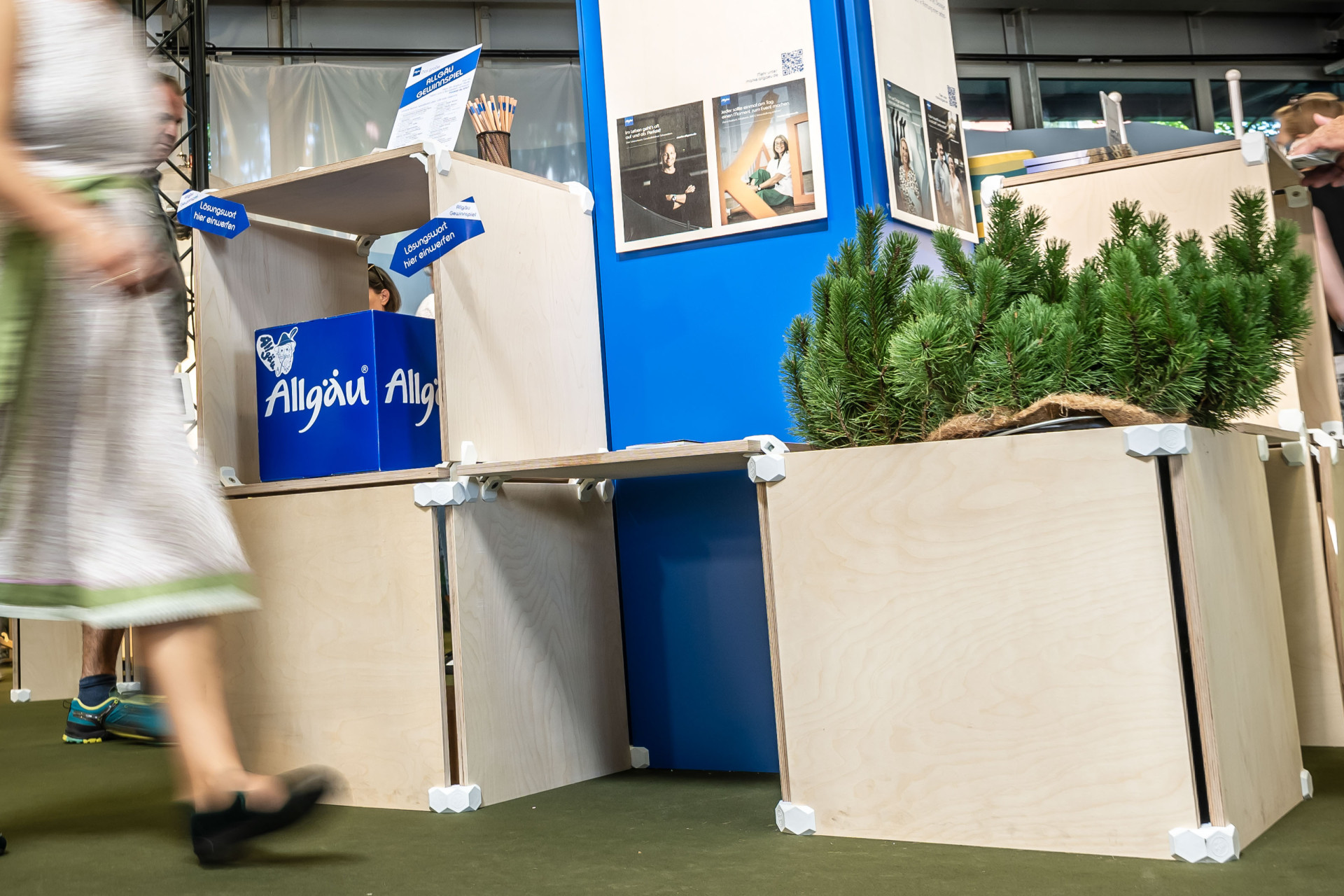
When it comes to the value of “originality,” what comes to mind first at the House of Allgäu Values is a detail that’s actually quite unassuming: the way our shelves are connected.
Instead of using traditional screws to assemble furniture or creating fixed fixtures, we worked with a simple plug-and-connect system from PlayWood. Wooden panels are held together by connectors and can be taken apart, rearranged, and reassembled. This way, we didn’t end up with a rigid exhibition system, but one that could evolve alongside us. Using the same basic elements, we were able to create new shelves, display areas, and layouts time and again. And we’ve been doing this for 5 years now.
For me, that’s exactly what makes it original: not necessarily having to invent something completely new, but putting familiar elements together in a different way.

What do visitors actually say?

After several years, we had naturally developed our own sense of what works in the building. The 2025 project also gave us the perspective of the people for whom we are designing this space.

The results were quite clear:

  • About 96% found the spatial design to be harmonious or very harmonious
  • About 92% rated the way the interior design conveyed Allgäu values as good or very good
  • 64.21% cited a “sense of home” as the predominant emotion
  • 86.6% would recommend the House of Allgäu Values to others
  • More than 84% gave it four or five stars

Wood, plants, natural materials, brightness, shades of green and blue, and the open layout were particularly frequently cited as positive aspects. In doing so, the visitors described quite precisely the elements we had used years earlier to spatially translate regional identity, naturalness, openness, and community.
So the design was indeed understood and felt.

What I learned from this

After five years, I therefore find myself asking less whether a design element is beautiful.
I ask myself: Does this material really fit the story? Does this space encourage interaction? Does the room convey a sense of calm when we talk about “peaceful”? Is an idea truly original - or just eye-catching? There are three things in particular that I’ve taken away from the past few years:

  1. People rarely remember individual design elements.
    They remember a feeling. When someone later says, “It somehow felt like the Allgäu,” that’s perhaps the greatest compliment.
  2. Less can mean more of an experience.
    Open spaces aren’t unused areas. Tranquility is also a form of design. Not every square meter has to convey a message.
  3. Values require consistency.
    A brand doesn’t become credible simply because its logo is displayed as large as possible in a space. Rather, it’s when the materials, behavior, communication, and atmosphere all tell the same story.

Five years later: A concept that grows with you

In 2026, we’ll be supporting the House of Allgäu Values for the fifth year.
And perhaps one of the greatest strengths of the original concept is becoming apparent right now: It still works. Not because it has remained unchanged for five years, but because it was designed from the start to be adaptable.

The modular wooden elements are recombined, shelves take on new functions, spaces are reconfigured, and new content is added. Much of what was created in 2022 is still in use today - just in ever-changing ways. For me, this is an important part of good event design: not tearing everything down, throwing it away, and starting from scratch every year, but rather creating a strong design foundation that can be built upon. The four values - honorable, wholesome, peaceful, and original - have also remained. They continue to provide the framework for the venue to this day - while simultaneously offering the opportunity to tell new stories time and again. After five years, our focus is therefore less on reinventing the venue and more on building on what already exists.

Conclusion: Good design should stay

Over the course of five years, we’ve observed how a space can change without losing its identity. Elements are reused, rearranged, supplemented, and adapted. What works gets to stay. What doesn’t work is changed. Perhaps that is precisely one of the most important insights from this project: Good event design doesn’t have to be new every year to feel fresh. It requires an idea that’s strong enough to endure - and at the same time open enough to evolve.
And when values like honorable, wholesome, peaceful, and original aren’t just on paper but become tangible in the materials, the space, and the interactions, then design becomes more than just a beautiful backdrop.

One final question:
What four values would a space need to convey for you to recognize your brand within it - without a logo?

Frequently asked questions

Your most common questions on this topic – answered from our day-to-day experience.

Related content

More posts for the linked service page: Trade Fair & Exhibition