Marvel, paint, talk: places where we look at one another.

What a paintbrush at the bar, a light that never reveals everything, and old pictures of our city tell us about genuine encounters.

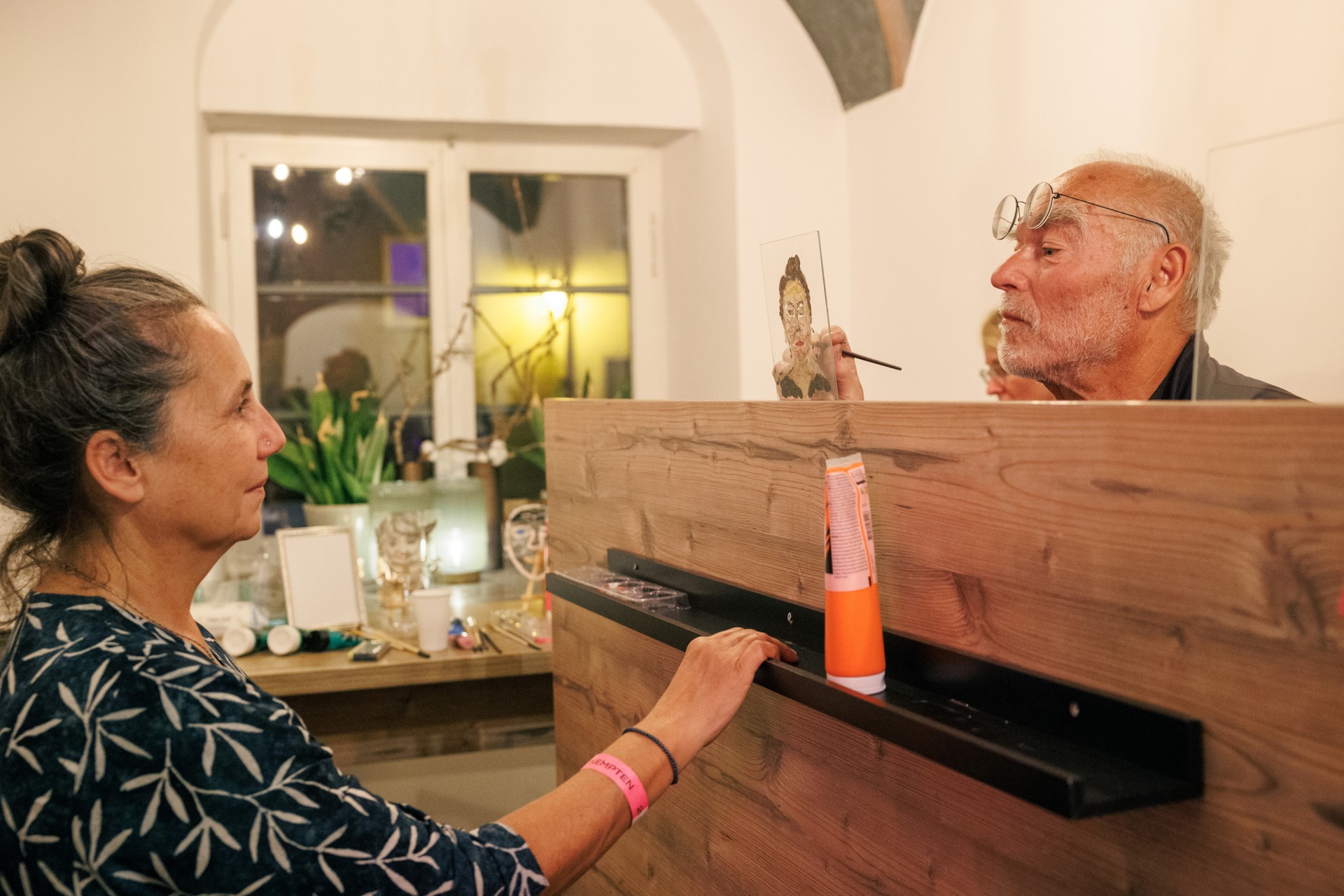
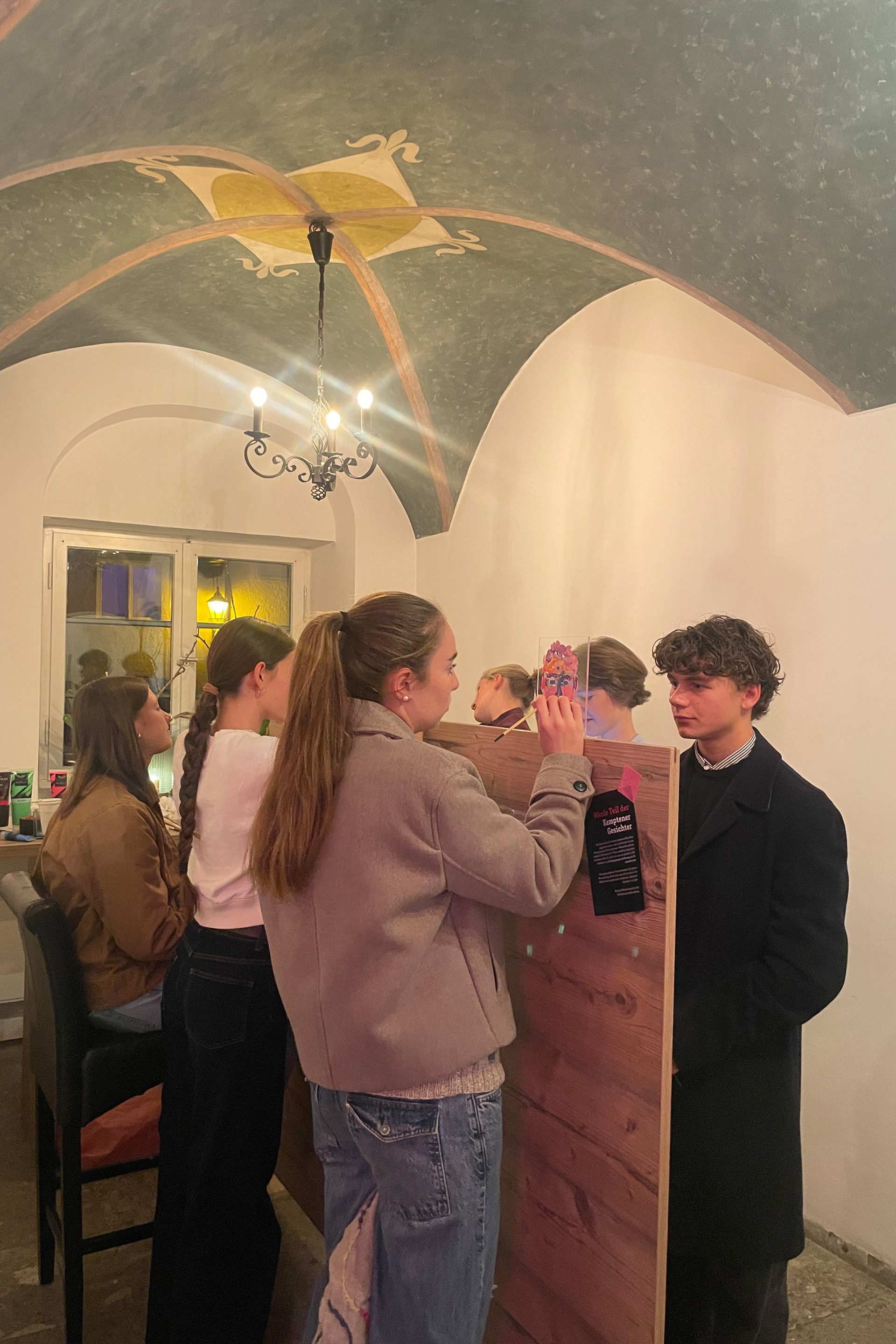
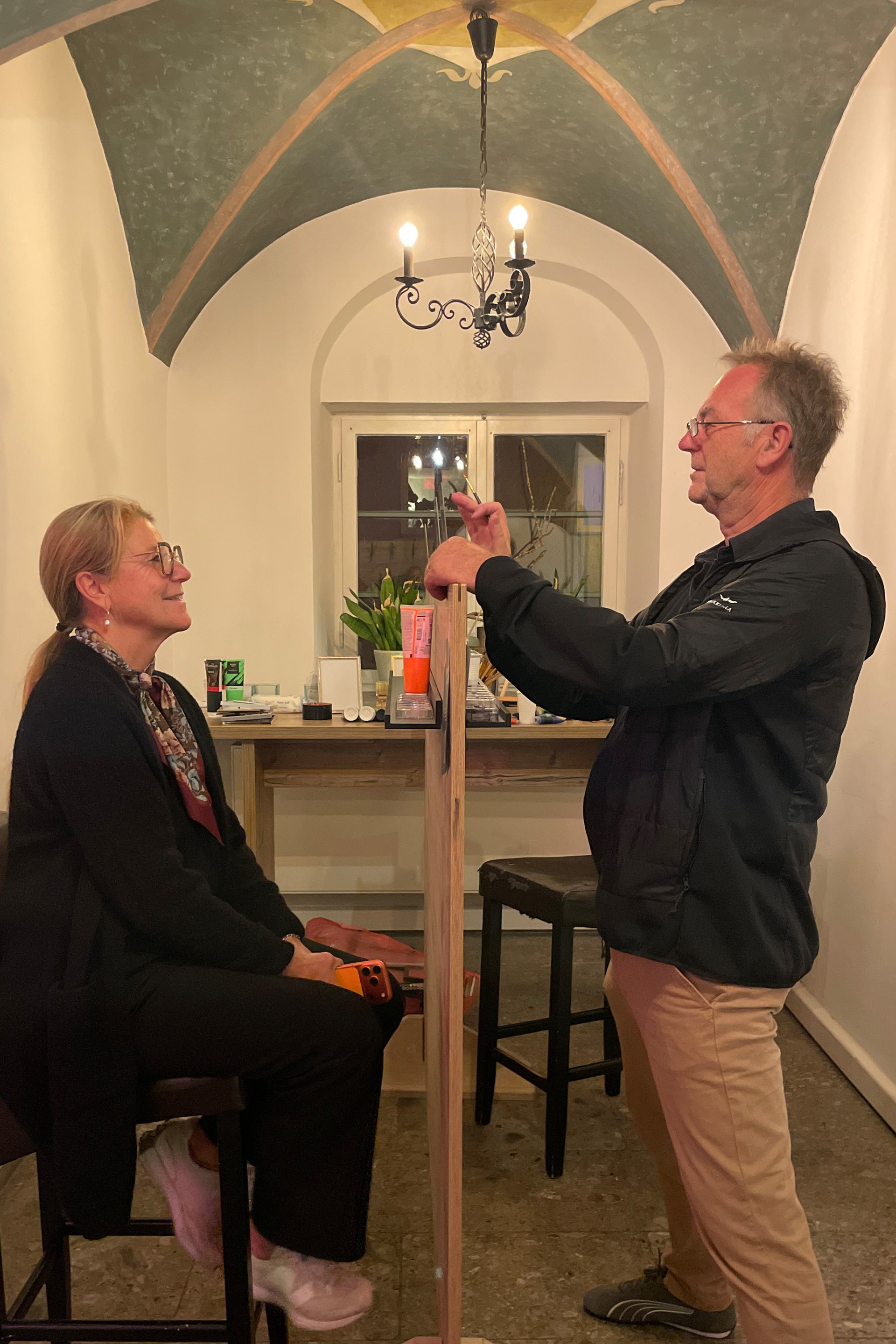
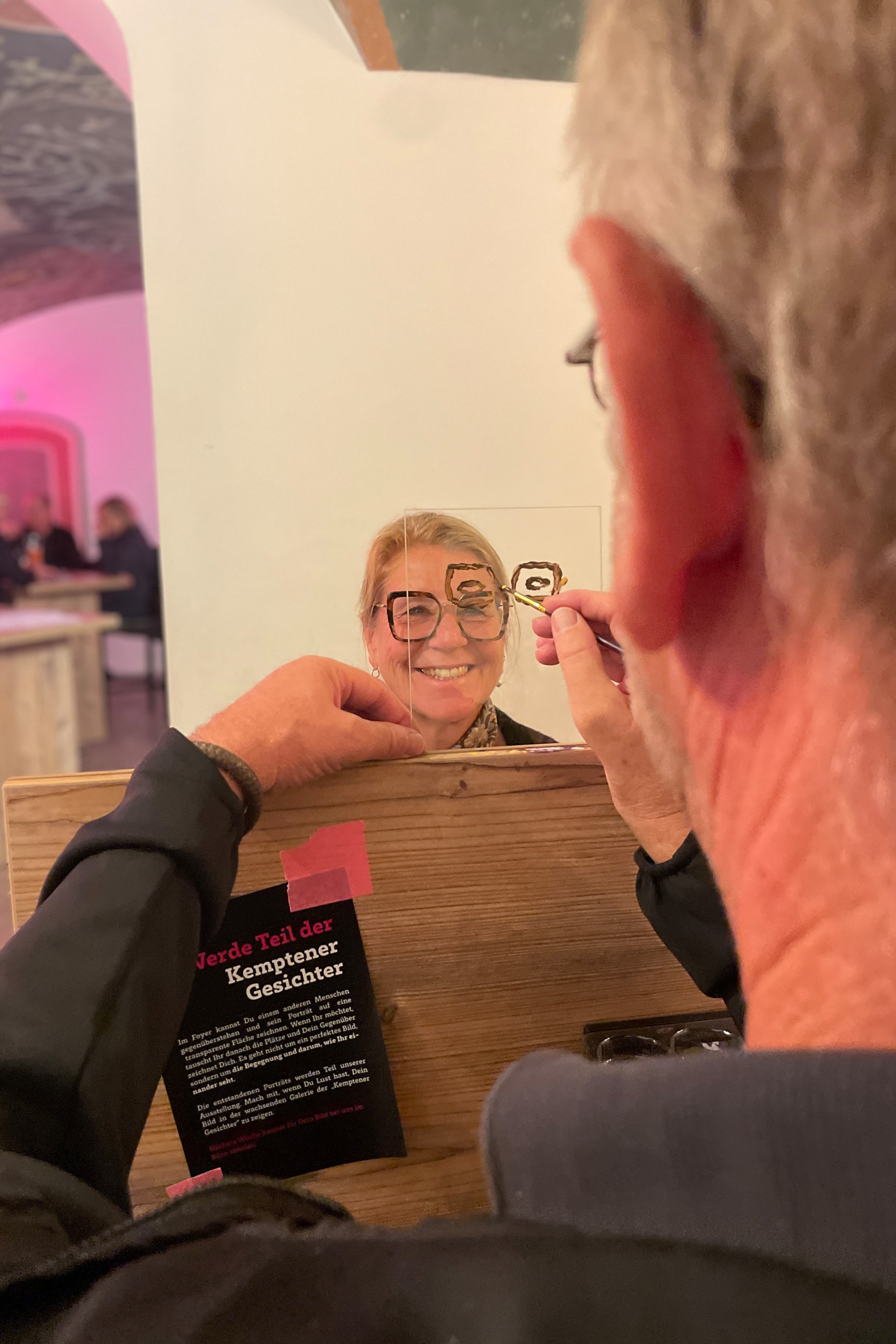
Brushes were laid out at the bar in our foyer. A glass panel separated them, with a seat on each side. A sign, but no host. And yet, that evening, I saw the same thing happen over and over again: Someone would set down their glass, glance briefly, and pick up a brush. Across from them sat another person. The two would begin painting each other, talking to one another, and, above all, laughing.
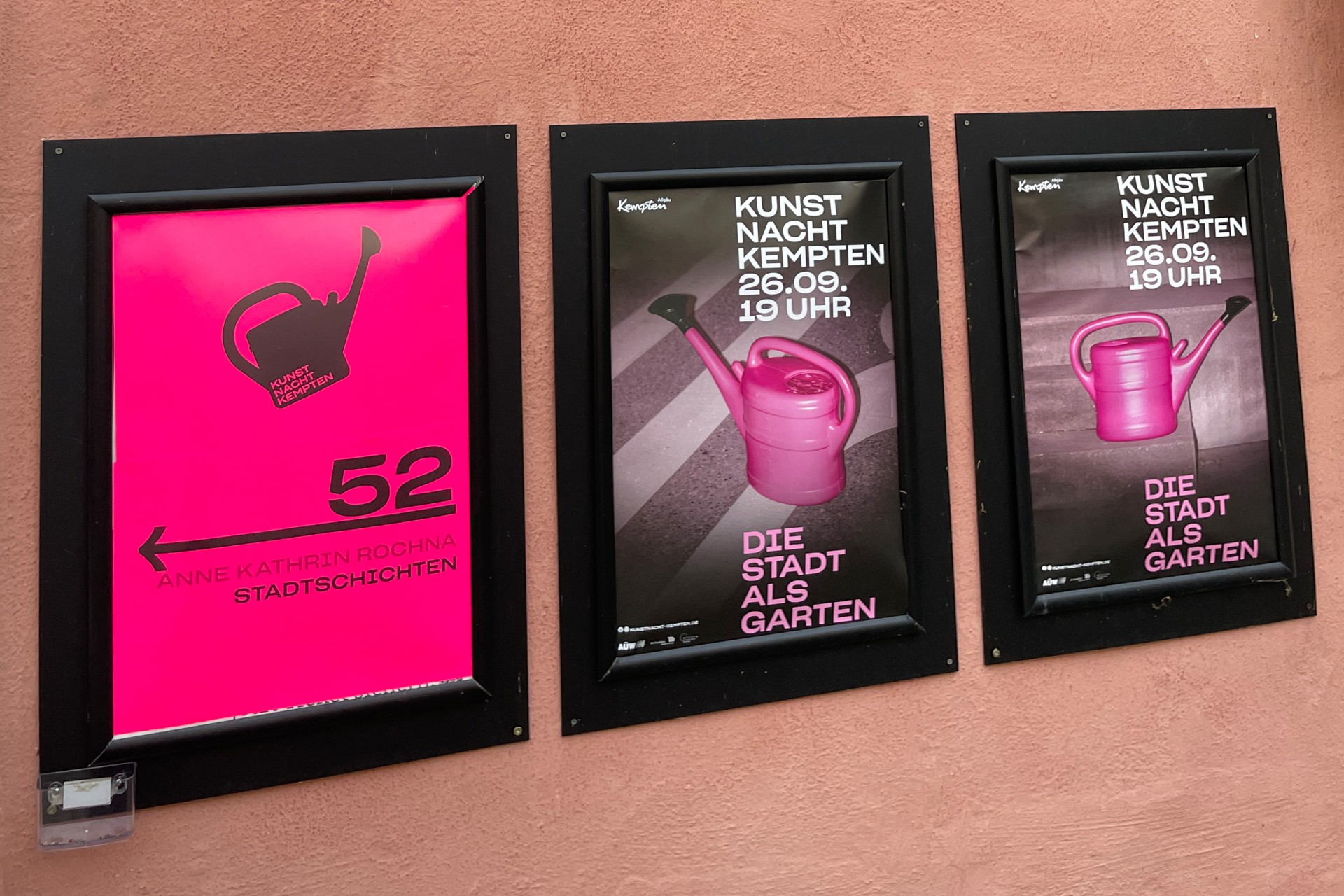
That was on September 26, 2026, during Kempten’s KunstNacht. With DER SALON, our venue in Kempten’s old town, we were one of the locations for the event that night. Around 500 people came to visit us, most of them between 8:00 and 10:00 p.m. As Art Director at KAD, I had the opportunity to translate the theme “The City as a Garden” into my own concept: StadtSCHICHTen.
Every day, I work on events designed to get people talking. Rarely have I seen so clearly how little it takes to make that happen - and how precisely that “little” has to be just right.

Photos: © by KAD / Felix Gruenschloss

Author
Article type
Service
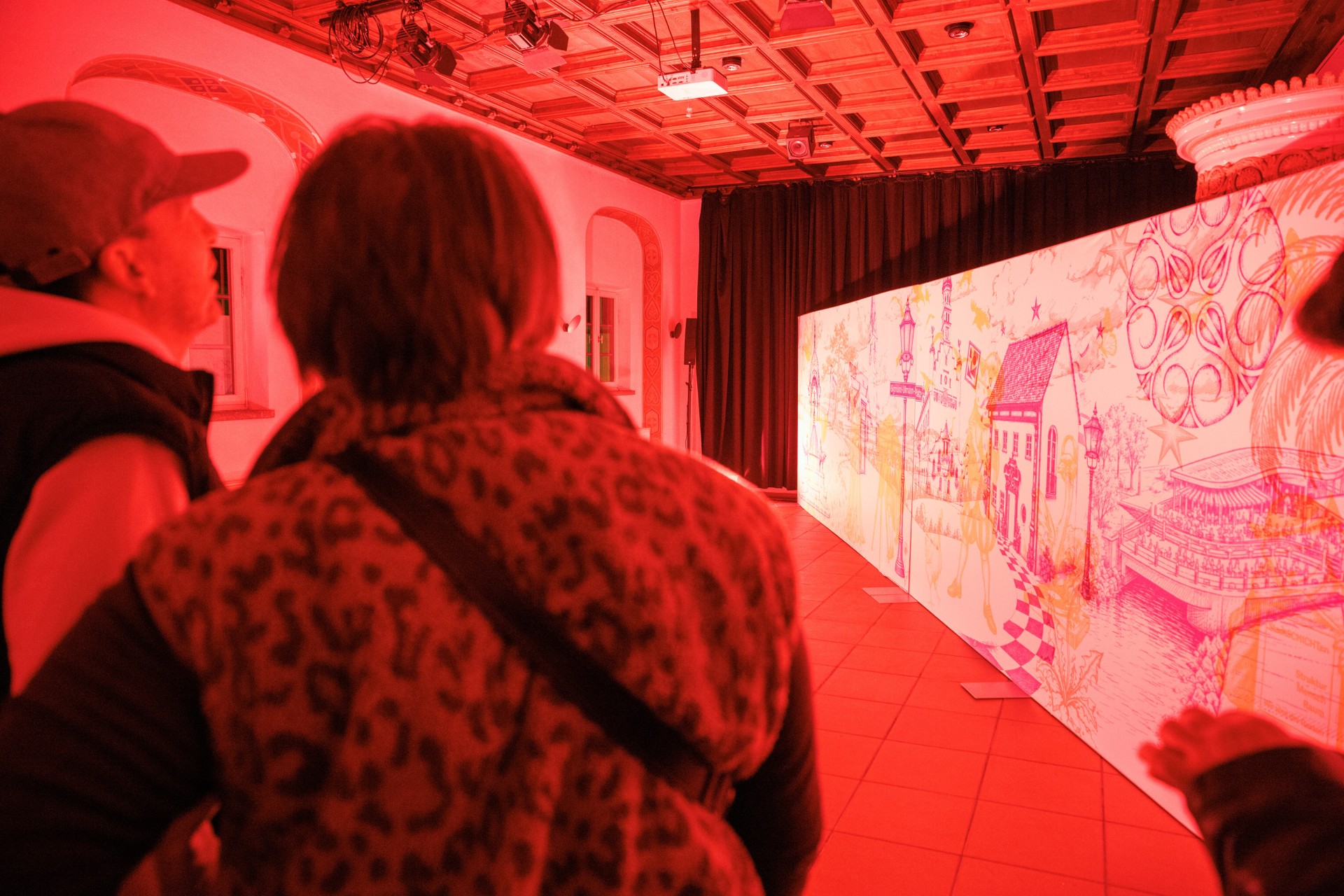
Two visitors view a large, colorful art installation on the wall of a red-lit exhibition room at DER SALON in Kempten.

Kempten Art Night 2026: The city as a garden

Every two years, Kempten’s downtown transforms into an art gallery for one night. The 2026 event marked the eighth edition: from 7 p.m. to midnight, at 72 venues, featuring more than 100 artists. Organized by the city’s Department of Culture, this year for the first time in collaboration with the STADTKULTUR Bayern network. The theme: “The City as a Garden.”

Our Contribution: StadtSCHICHTen at DER SALON
Why would an event agency participate in an art night? Because with DER SALON, we have a venue that’s made exactly for this: a historic building on Sigmund-Ullmann-Platz, right in the heart of the Old Town, spread across several levels. And because the theme immediately captured our imagination.
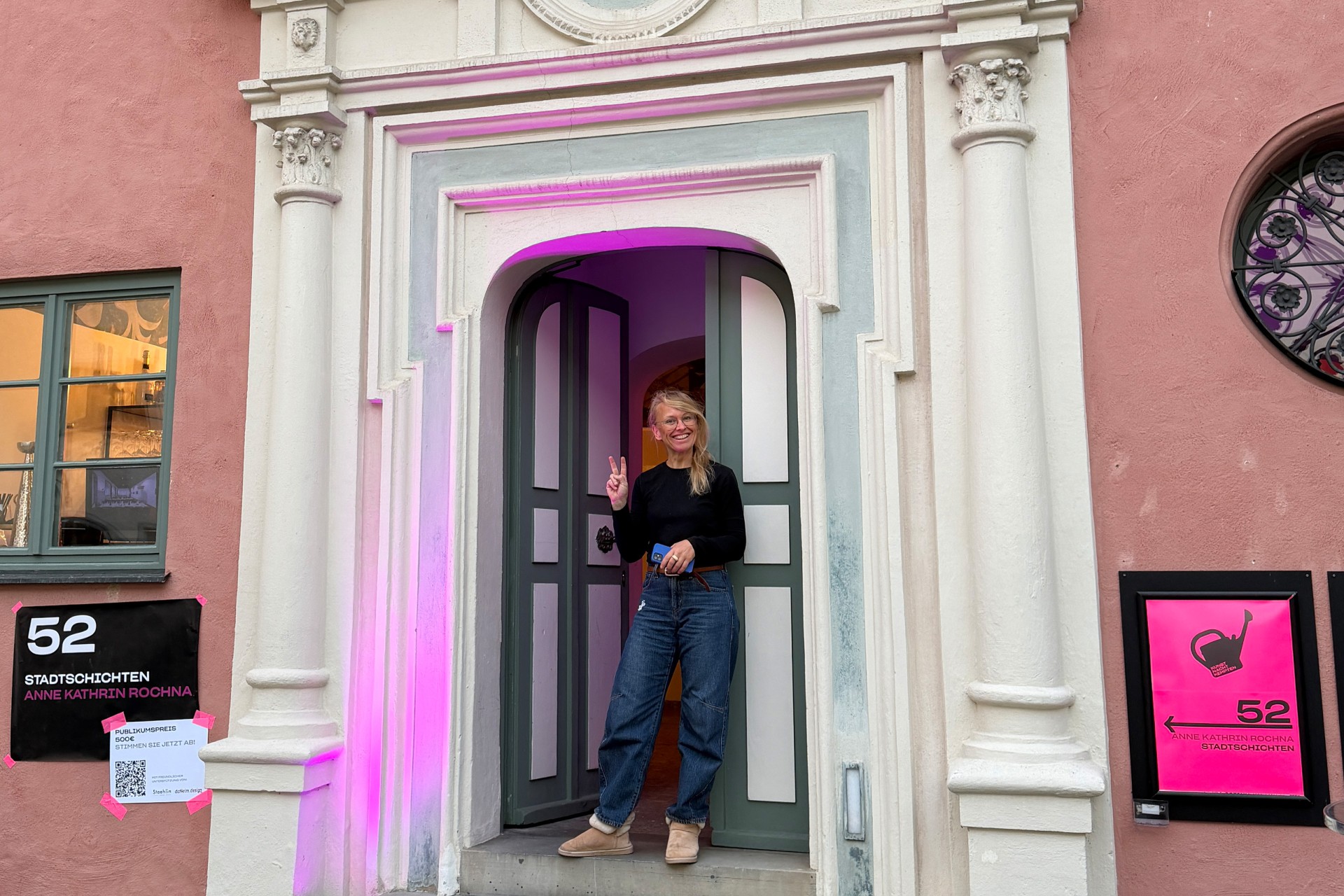
My thinking behind it: A city is more than just buildings, streets, and squares. It has layers. The structure of architecture and pathways. The people who live there. And the space where both come together. That’s why I gave the project a subtitle: “We Are the Garden.” A city grows through the people who meet within it. In the official program, StadtSCHICHTen was listed under number 52.

Arrival: The city of yesterday

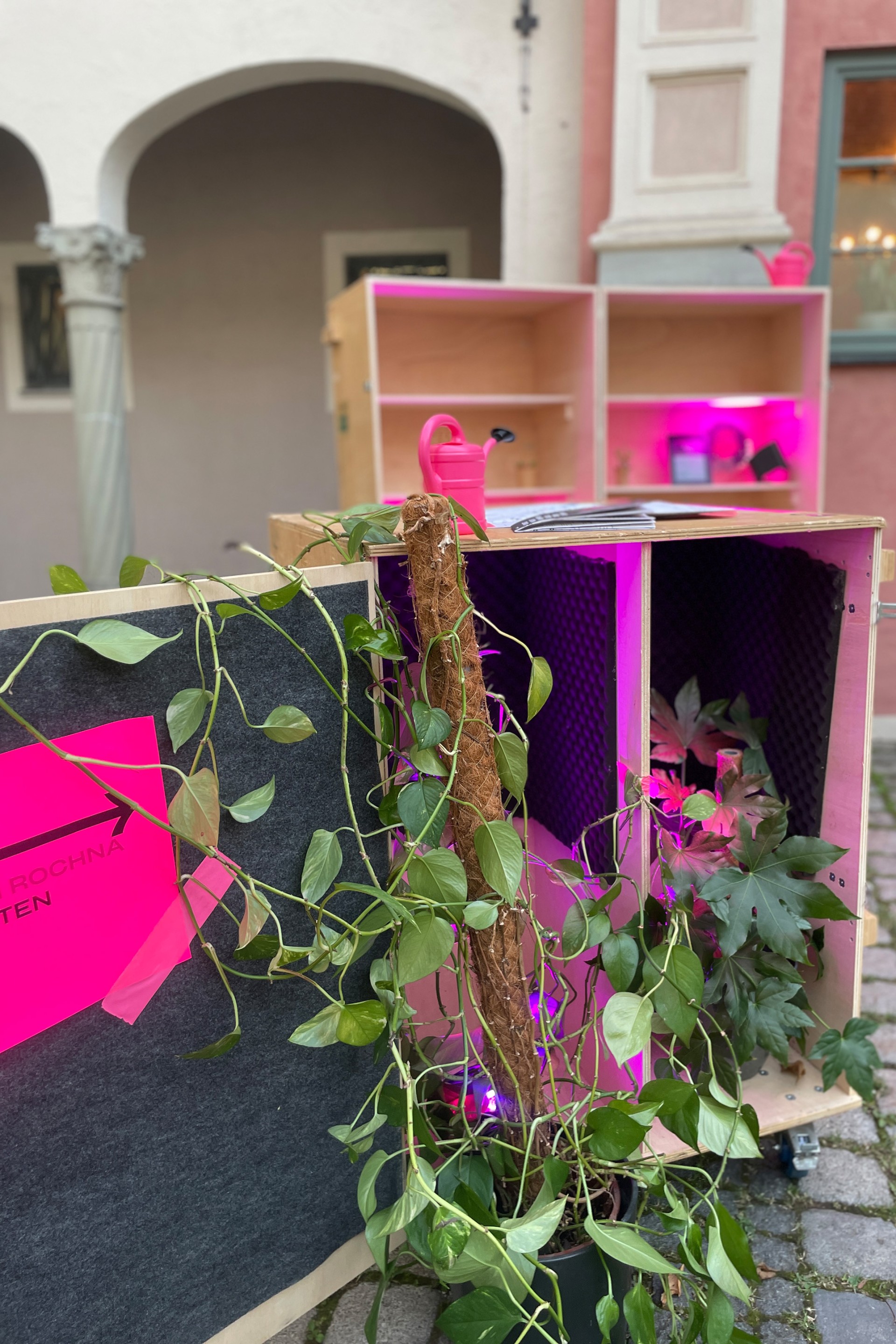
The evening began outside on the forecourt. There were two simple wooden display cases there, which were still almost empty at the start. Over the course of the evening, a small open-air exhibition was to take shape inside them. More on that in a moment.

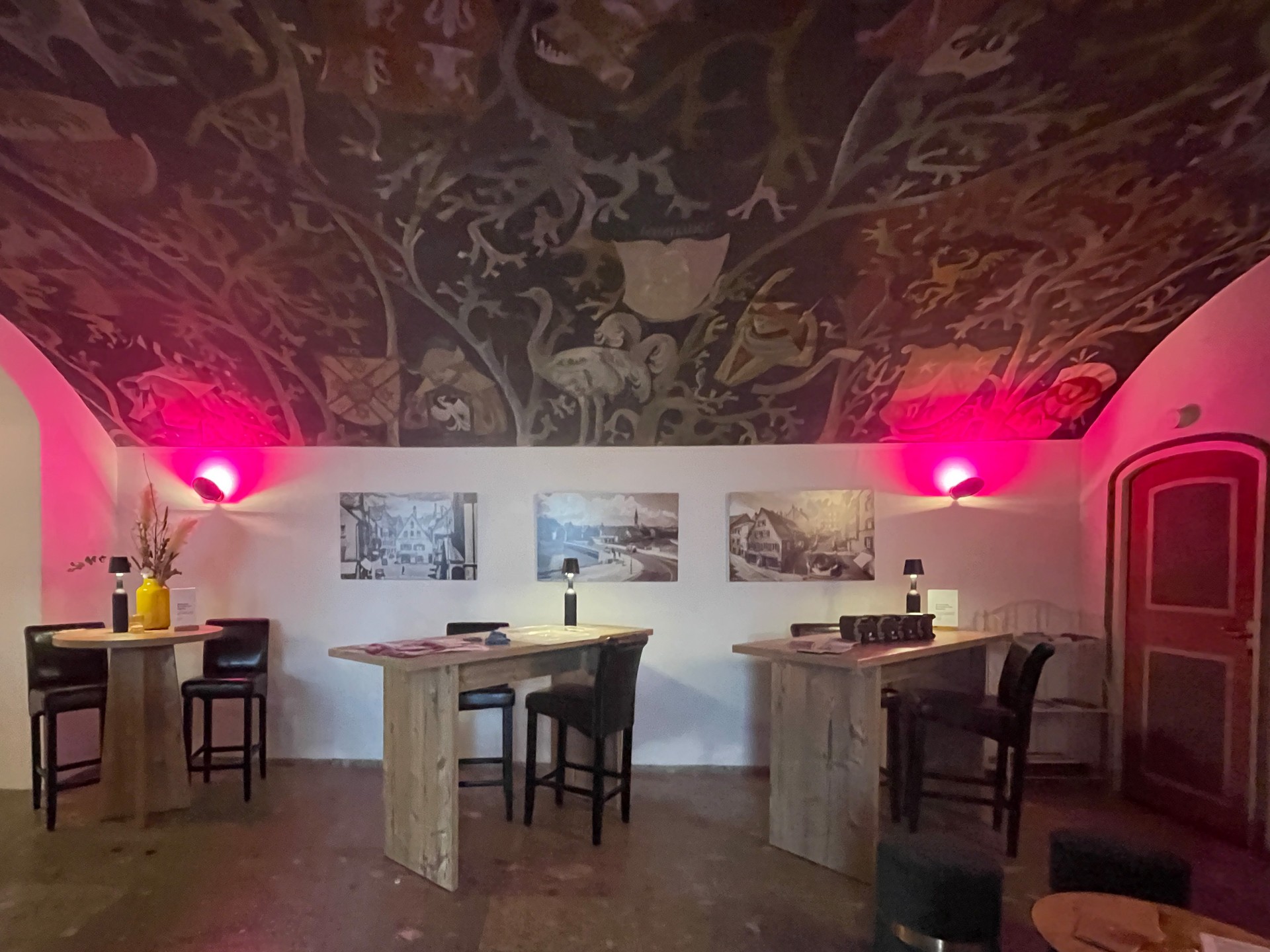
In the foyer, guests were greeted by three historical photographs by Mathias Sinz, our in-house photographer: the Kempten Bridge, City Hall, and Fischergasse in the 1950s. Why did we start with the past? Because every city builds upon the images left by the generation before it. And because old photos can do something that hardly anything else can.

You’re probably familiar with this: You stand in front of an old photo of your city and immediately look for the corner you walk past every day. “There used to be…” is one of the easiest ways to start a conversation.

Get involved: why our guests picked up a paintbrush without any instructions

In the foyer, right by the bar, I experienced the biggest surprise of the entire evening.
It’s a scenario everyone recognizes from professional life: the company party, the client reception, the conference break. You’re standing at a bar table, holding onto your glass, and chatting with people you already know. The conversation revolves around the buffet or the weather. You’ve known each other for years, yet you hardly ever really look at one another.
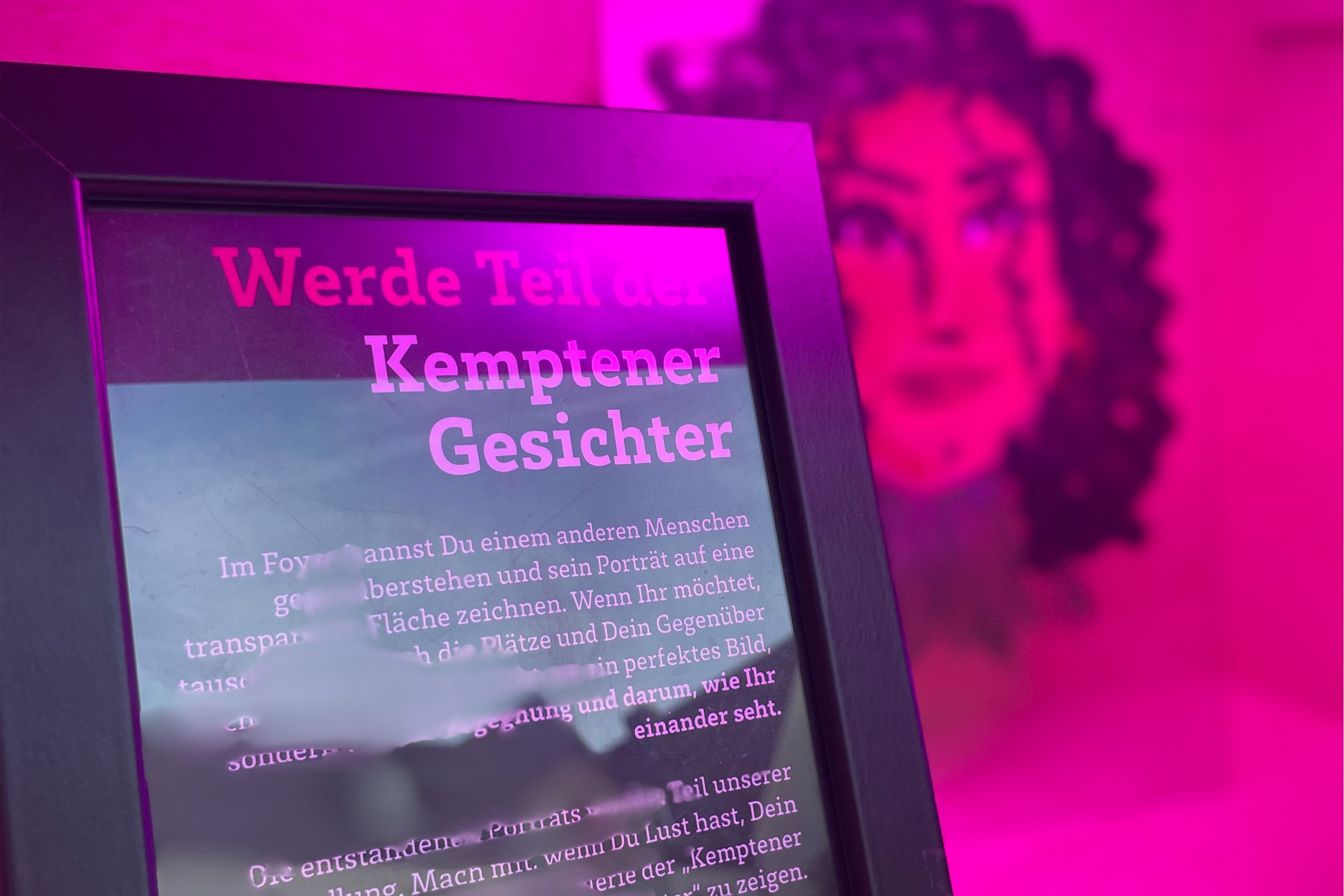
On paper, our evening looked similar: a foyer, a bar, people with drinks. But there was an invitation. And the guests accepted it without us having to explain much. They picked up paintbrushes and painted each other on a transparent surface. Just one minute after we opened, the first group was already seated there: five young women who got started with loud laughter. By the end of the evening, 45 glass portraits had been created.
What I found fascinating was who was sitting across from whom: exclusively couples and friends. People who know each other - some for many years. And yet they looked at each other as if they were seeing one another for the first time. One guest in particular stuck in my memory: a goldsmith who spent 45 minutes working on his wife’s portrait.
Evolutionary biologist Elisabeth Oberzaucher explains that at events, other people become “sort of like temporary relatives” because they share a common goal. At our bar, that goal was a small one: a face on a glass. But it was enough.
To me, there’s a beautiful idea in that: an encounter doesn’t always mean meeting new people. Often, it means truly noticing people you already know. And that’s just as valuable - if not more so - at any company party.
Why did it work so well? I see three reasons.

The Location: Right in the Middle of the Bar
We didn’t set up the painting activity in a separate room or announce it as a scheduled event. It was right where people were already hanging out. No one had to make a special effort to go anywhere. The painting didn’t interrupt the small talk—it replaced it.
Harrison Owen, the founder of the Open Space method, is often quoted as saying that the coffee break is the best part of many events. His idea: Why not make the coffee break itself a format? At our bar, that’s exactly what we did.

The setup is self-explanatory
Two spots facing each other. Glass in between. Brushes and paint within reach. That’s all it takes for everyone to understand what’s meant. A good setup acts like an open door: You don’t have to tell anyone they’re allowed to walk through.
This is what the station looked like:

  • a transparent surface between two people
  • brushes and paints right next to it
  • a location in the foyer, by the bar
  • no registration, no waiting number, no announcement

“No Perfect Pictures” Takes Away the Shyness
The biggest obstacle to any participatory activity is the fear of making a fool of oneself. That’s why it was clear from the start: We’re not creating works of art for a museum here. We’re creating genuine encounters.
And those begin with looking. If you’re drawing someone, you have to look at them—longer and more closely than you normally would in everyday life.

Awe: Light that never reveals everything at once

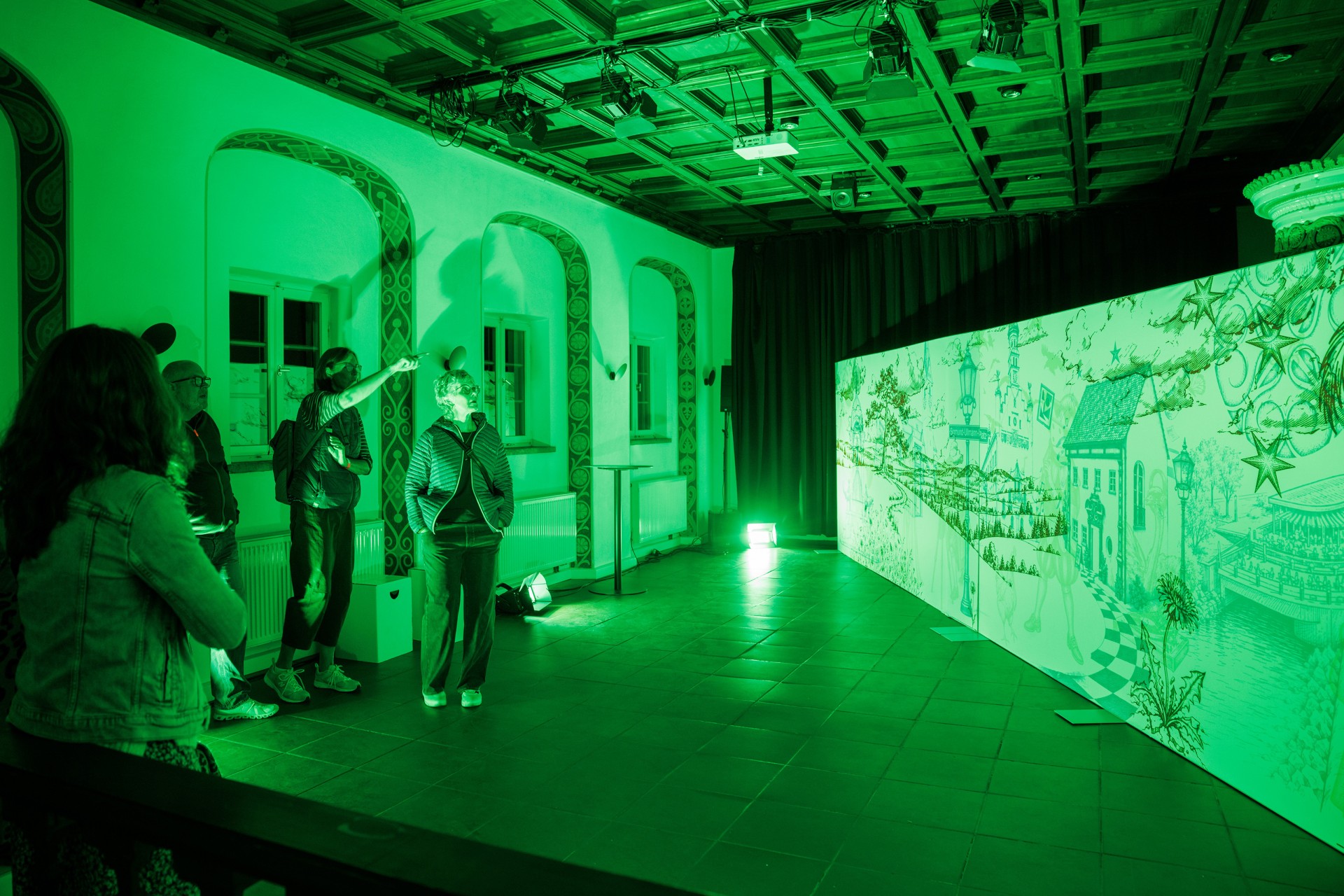
On the first floor, in our salon space, the city became visible as a structure. A continuous pattern of lines stretched across the walls: an abstract cityscape composed of architecture, paths, and silhouettes.
Light sources in the room slowly changed color. And with each color, a different city emerged:

  • Blue revealed the city’s structure.
  • Red revealed the lives of the people within it.
  • Green served as a reminder that cities are part of a living system.

You could never see everything at once. Just like in a real city, only a small section was ever visible.
That’s exactly what amazed people when they reached the top. And amazement has a quality that I observe time and again at events: you want to share it. When you see something unexpected, you turn to the person next to you. “Did you see that?”
Why do we deliberately not show everything? Because a gap sparks curiosity. When you see only a small section, you stop, wait, and look more closely. And afterward, you have something to talk about.
One visitor probably described best how the evening affected people who hadn’t even expected to be there. With a shy laugh, she said, “I’d actually planned a route that went right past the installations. I just happened to walk by here. I was absolutely thrilled, and it really moved me - especially the music.”

The garden has grown: Faces of today, pictures from back then

Every glass portrait created at the bar made its way outside into the wooden display cases, which had been almost empty at the start of the evening. As the night wore on, they filled with “Faces of Kempten”: 45 portraits in five hours. Outside, the faces of today; inside the foyer, the images of yesteryear - just a few steps apart. For me, that was the moment when the theme really came to life: The garden had grown - and it was the guests themselves who had made it grow.

Why is making things visible so important? Behavioral science has a name for this: the IKEA effect. Michael Norton, Daniel Mochon, and Dan Ariely have shown that people value things they’ve made themselves significantly more highly - even as amateurs and even when the results are less than perfect (Journal of Consumer Psychology, 2012).

For events, this means: If you let guests create something, you should also show the result - that very same evening, while everyone is still there.

An honest caveat is part of this. Participation is not an end in itself. In her book Artificial Hells (2012), art historian Claire Bishop questioned the widespread assumption that participation is automatically a good thing. I agree with her: An invitation only works as long as it remains an invitation. That’s why, in the event industry as well, voluntariness is considered a fundamental rule of good participation. At our event, no one was required to paint. Those who preferred to watch simply watched. And that, too, was part of the experience.

What Good Event Design Achieves

What happened that evening was no coincidence. Each station was the result of careful consideration: Where do guests spend their time? What do they see first? What encourages them to get involved? That is exactly what event design is all about: the deliberate shaping of people’s experiences in a given space.

In his white paper “Event Design - Participatory, Creative, Effective” for Convention Partner Vorarlberg, Michael Gleich describes just how much potential lies in this approach. According to experts, between 70 and 90 percent of all events still follow the traditional pattern: speakers present at the front, and the audience listens. This format has its place. But if guests are to engage in conversation with one another and take something away from the experience, it takes more than just a good program.

On top of that, expectations for events have risen since the pandemic. Anyone who invests time to attend in person expects tangible added value compared to an online format. And this added value lies above all in face-to-face interaction.

Foundation manager Markus Hipp sums up what matters: Effective events arise from a harmonious triad of intention, a suitable venue, and good guest support. For StadtSCHICHTen, this meant a clear concept, a multi-level building, and a layout that naturally guided the guests.

The paper also describes what happens to the guests in the process: Participants become contributors. They experience self-efficacy - that is, the feeling of having made a difference themselves. A glass portrait that you’ve painted yourself and that, shortly afterward, is displayed in the showcase in front of the house is exactly that kind of moment.
That said, not every event needs to involve its guests. The purpose is what matters. But if the goal is for people to connect with one another, it’s worth incorporating that very element into the planning from the very beginning.

What I learned from this

StadtSCHICHTen was an art project. I’m applying the insights I gained from it directly to our next client events. Here are five principles that apply to any event where people are meant to actually talk to one another:

  1. Start where people are already gathered. The bar, the lobby, the coffee station during a conference break. Any extra distance is a hurdle. If you have to lure guests to a different location first, you’ll lose many along the way.
  2. Setup, not instructions. If a setup needs to be explained, it’s too complicated. Guests understand good interactive stations at a glance.
  3. First, amaze them; then, let them participate. Amazement opens people up; doing things together brings them closer. A surprising moment lowers the barrier to starting a conversation.
  4. Set the bar low. “No perfect pictures” is permission to participate. When people don’t have to worry about the outcome, they’ll join in.
  5. Display the results while the guests are still there. What’s visible matters more. And it gives everyone a reason to stop by again.

The most important thing for me personally: You can’t force people to connect. No one has ever had a good conversation just because someone told them, “Go network now!” But you can certainly create the right conditions for connection: with the right setting, a well-thought-out structure, and a moment that takes people by surprise.

Conclusion

That evening at the SALON, we presented a city in layers: images from yesterday, a structure of light and lines, and the people of today. Yet the most powerful image of the night was created by the guests themselves - at the bar, with a paintbrush in hand, without anyone having to explain it to them.
By the end of the night, their faces were displayed in the showcases in front of the building, just a few steps away from the historic photographs of Kempten. For me, this is the most beautiful interpretation of “The City as a Garden” that I can imagine: A city grows through the people who come together within it. And a good event creates the space for that.

And what about you? Where will your guests gather at your next event - and what could be waiting for them there?

If you’d like to brainstorm this with us: Write to us or get to know DER SALON as a venue for your own event.

*References:

  • Michael Gleich: „Eventdesign – partizipativ, kreativ, wirksam“, Impulspapier #8, Convention Partner Vorarlberg. Darin zitiert: Elisabeth Oberzaucher und Markus Hipp im Podcast „Grenzenloses Eventdesign“ (Folgen #24 und #45).
  • Michael I. Norton, Daniel Mochon, Dan Ariely: „The IKEA Effect: When Labor Leads to Love“, Journal of Consumer Psychology, 2012.
  • Claire Bishop: „Artificial Hells. Participatory Art and the Politics of Spectatorship“, Verso, 2012.

Frequently asked questions

Your most common questions on this topic – answered from our day-to-day experience.

Related content

More posts for the linked service page: Events